
New Year’s Resolutions: How to Set Safety Goals
December 28, 2016
While perhaps we don’t refer to them as New Year’s resolutions, setting yearly goals is something that every business does, or at least should be doing. Setting safety goals is extremely important for the success of your organization’s safety program. But, much like our personal resolutions, it’s hard to know where to begin and what our goals should look like. We’ve come up with three things that every goal you set should do:
Address a Need
Don’t just concoct safety goals based on what you think your company should be doing or what everyone else is doing, base them on the issues and needs that are present in your organization. Research and analyze the safety concerns that you’ve had over the past year. What can you do to address these concerns? Maybe there’s a goal there. If you had three injuries caused by falls from ladders last year, a realistic safety goal could be to reduce ladder-related injuries to zero in the new year.
Be SMART
Goals should be SMART, or Specific, Measurable, Attainable, Relevant, and Timely. You may have heard this one before, but it’s often overlooked when we write goals. If your goal addresses a safety need in your organization, it’s relevant and likely specific, but it also needs to be attainable, measurable, and timely. If your goal is to reduce all workplace injuries to zero, that’s not very attainable–incidents will always have a chance of happening.
The scenario from the previous example, reducing ladder-related injuries from three to zero in the upcoming year, is a more realistic and reachable goal than having no workplace injuries and is much more specific. This goal is also measurable because it is quantifiable; if the goal was simply “reduce ladder-related injuries,” it would be unclear as to how many ladder-related injuries would be acceptable in order to meet the goal. To be measurable, there should also be regular progress checks to see where things stand. The goal meets the timely criteria because it establishes a time frame for measurement–one year. Without a set time parameter, it’s difficult to stay on track with actions that lead to goal achievement.
Involve Everyone
We’ve said it before and we’ll say it again: safety is everyone’s responsibility. The president, managers, or safety coordinator shouldn’t be the only people involved in working toward safety goals. Employees should be made aware of and involved in setting organizational safety goals, and the steps that they can take individually and as a whole to help achieve those goals. If one of the company’s goals is to have zero ladder-related injuries in the next year, let employees know that. Make sure that you’re taking actions to meet the goal, like training all employees who use ladders on ladder safety, and that employees are involved in, engaging with, and understanding training in safe ladder-use practices.
Without any goals, your safety program will be directionless, and without good safety goals, ineffective. Good goals are designed to address company needs, be SMART, and involve everyone in the organization, from top to bottom. Give eSafety a call to find out how our LMS can help your organization reach its safety goals, or request a quote online today!
Solutions
What Solutions Do We Offer?
The eSafety platform delivers scalable safety training solutions for organizations of any size. Built by experts in safety and regulatory compliance, our powerful Learning Management System (LMS), comprehensive training content library, and Contractor Management System (CMS) tools make it easy to meet compliance requirements. With intuitive features designed for efficiency, eSafety helps keep everyone informed, compliant, and safe.
TRAINING
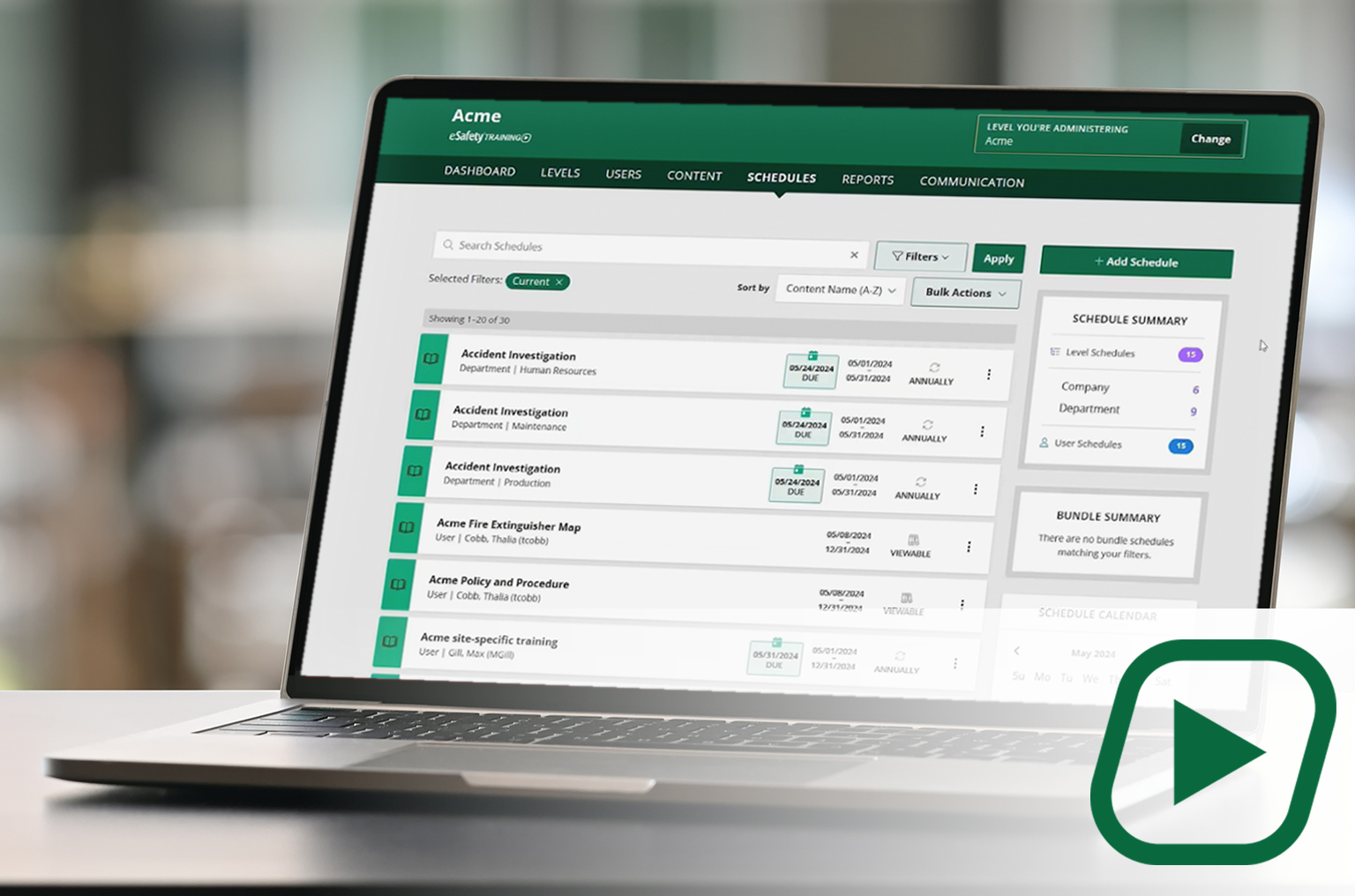
Our cornerstone learning management system (LMS) delivers a full library of compliant training content with intuitive features and capabilities to assign, track, and report on employee training.
✓Full content library
✓Schedule and manage training
✓Generate reports
CONTENT
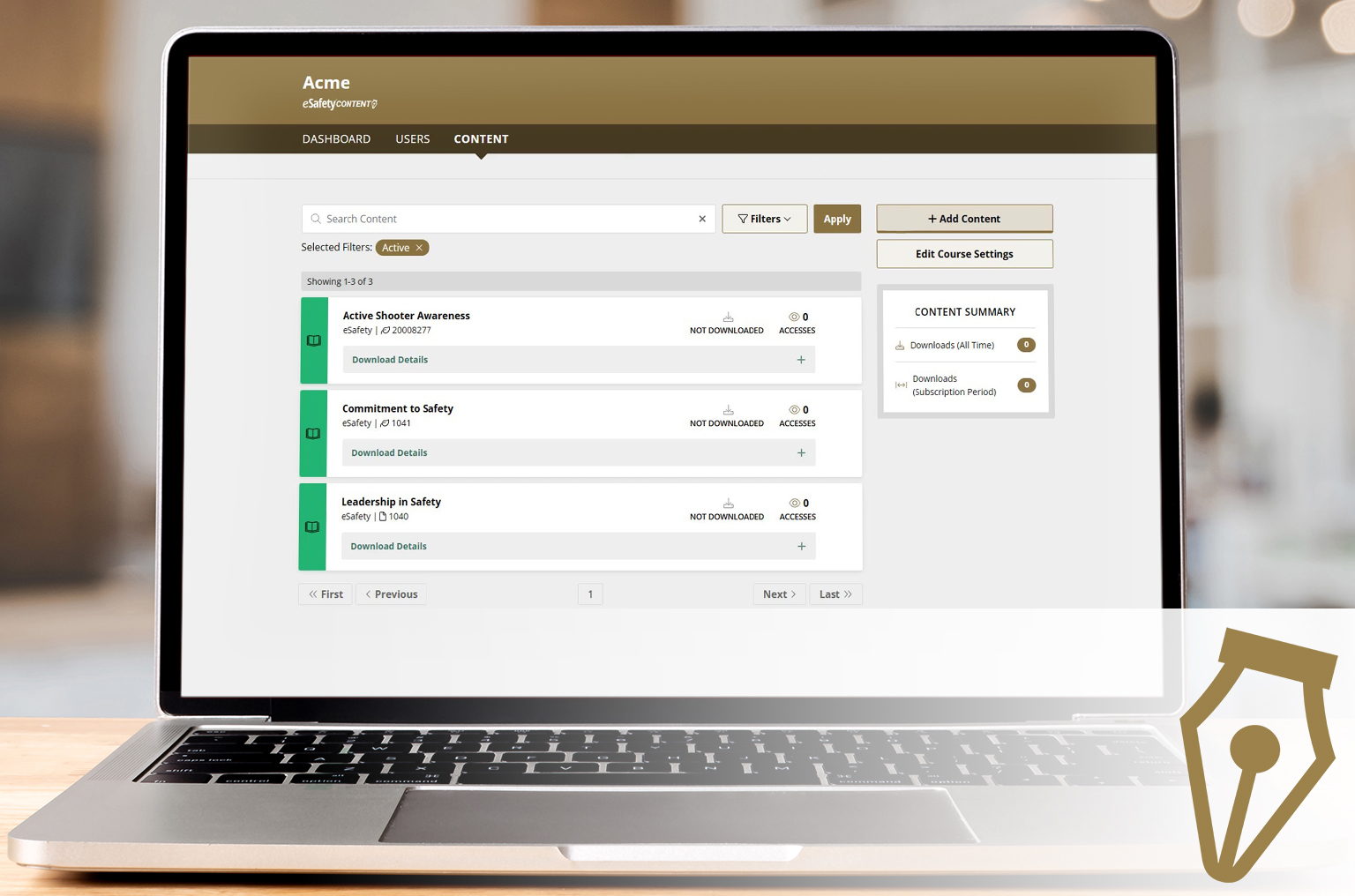
A portal to select and download our content (courses) to be added to another LMS. A client gets a SCORM file to upload into the LMS they use. With an active key, course updates are automatic.
✓Select your course package
✓Download ready-made courses
✓ Receive automatic updates
CONTRACTOR
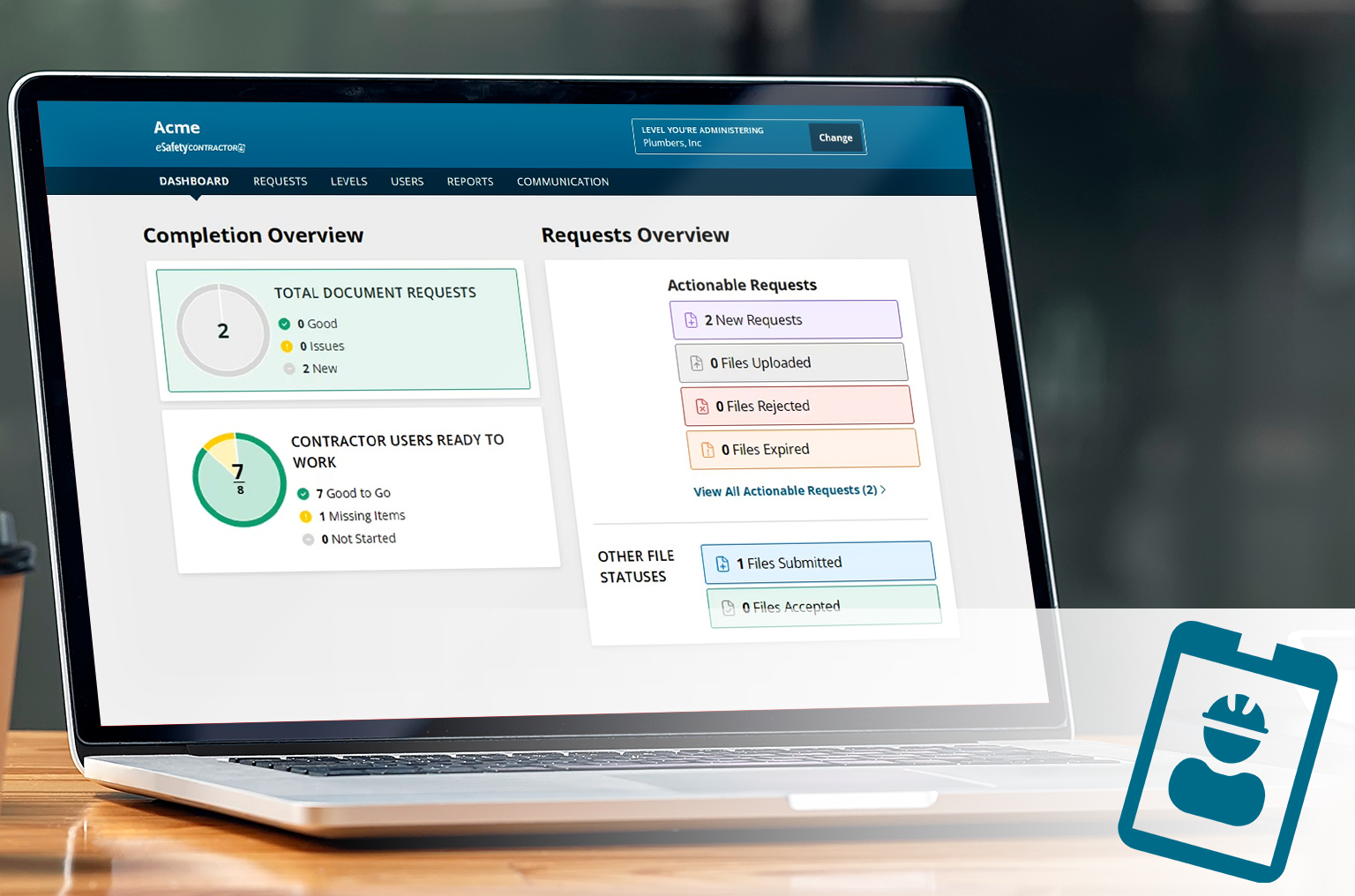
A CMS built to include LMS features to manage 3rd-party contractors coming to your site. Streamline the process of collecting and approving documents, conducting site-specific training, and more.
✓ Manage document requests
✓Assign site-specific training
✓Confirm approval to be on site
Popular Courses
Electrical Safety


Back Safety

Walking-Working Surfaces
Featured Articles